
Bay Area

Out in the field, most of the problems I see on a finished site started in the dirt. A parking lot that holds water, a curb line that will not drain, a building pad that settles after the slab is poured: more often than not, the grading was rushed or done in the wrong order.
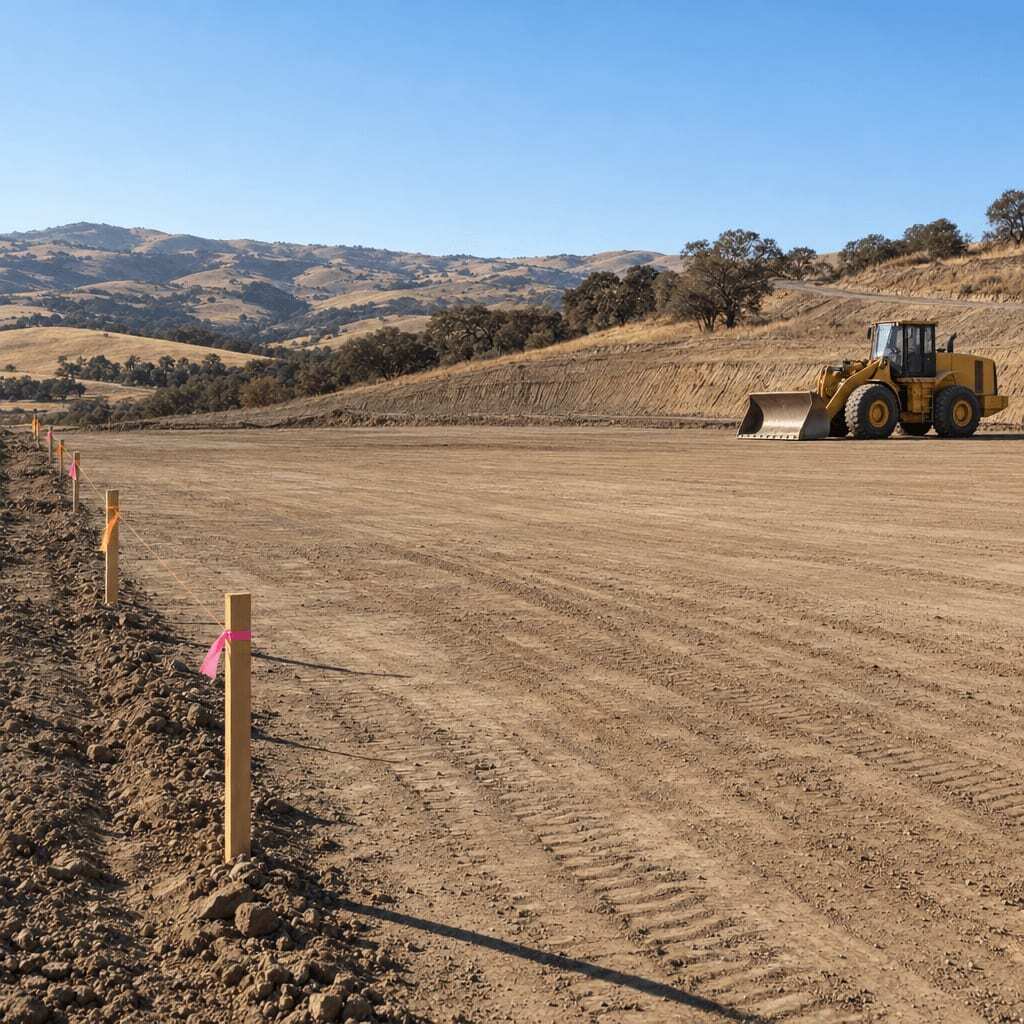
So here is the short answer. Rough grading moves the bulk of the earth, cutting high spots and filling low ones, so the site sits close to the elevations on the plans and the pad is compacted and ready to build on. Finish grading comes later and trims that surface to the exact grades on the plans, so water runs where the engineer intended and the paving, concrete and landscaping go down on a true base.
Both passes matter, and knowing the difference helps you read a bid, ask the right questions and keep your schedule honest.
What the work actually means
On a typical commercial or public site, grading happens in stages, with other trades working in between.
- Clearing and stripping. Vegetation, topsoil and debris come off so the grading starts on workable ground.
- Rough grading. We cut and fill to bring the site close to the planned elevations, placing and compacting fill in layers so the pad and the paved areas will carry what goes on them.
- Underground work. Storm drain, sewer and water lines go in below grade, and the trenches are backfilled and compacted before the surface is touched again.
- Finish grading. The surface is trimmed to the grades on the plans, with the slopes that carry water away from buildings and toward the drains.
- Hand-off to the next trades. Base rock, paving, concrete and landscaping go down on a surface that is already at the right height and the right slope.
Why the Bay Area is different
Grading here is rarely the same job twice. Soil can change from one block to the next, from expansive clay to sand to rock, and that changes how fill is placed and compacted. Many sites are on hillsides or squeezed between existing buildings, with little room for equipment or stockpiles. Each city also has its own grading permits and stormwater rules, so the plan has to match the agency's requirements before the first load moves.
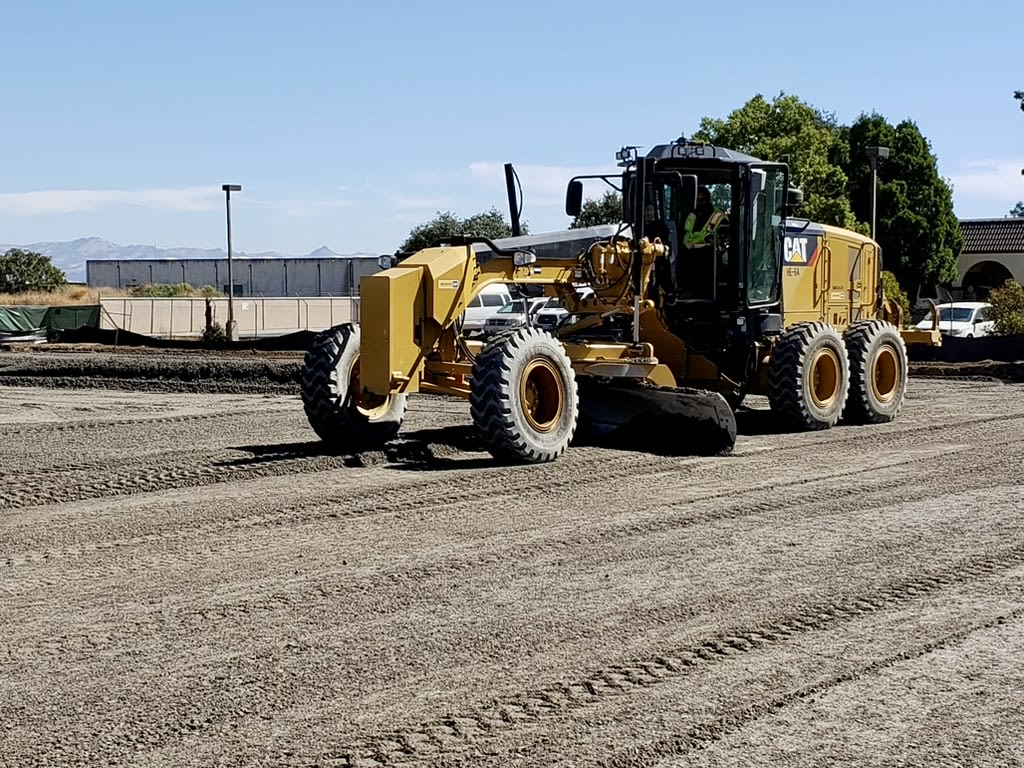
Finish grading trims the surface to the plan's exact grades so paving and concrete sit on a true base.
Why doing it right the first time matters
Grading mistakes do not stay in the dirt. A pad left high or low means extra import or export later. Fill that was not compacted properly can fail its test, and the work stops until it is dug out and redone. A finish grade that misses the plan shows up after the paving is in, as puddles, cracked flatwork or water running toward a building, and by then the fix costs far more than getting it right the first time. Getting the rough and finish passes right keeps inspections on track and the trades behind you on schedule.
How South Bay Grading runs it
We run grading and excavation as part of a full sitework scope that includes underground utilities, paving and asphalt, concrete, landscaping and demolition. Our crew and equipment work from the plans and the stakes, we check grades as we go, and we keep the general contractor or owner's team informed so the next trade knows when the ground is ready. Our aim on every job is site work done right, on time and without surprises.
See the scopes we cover on our Field Services page, or learn more About Us.
Ready to Break Ground?
If you are planning a commercial or public site in the Bay Area, request a bid or call us at (408) 256-1513 and tell us about your project.