
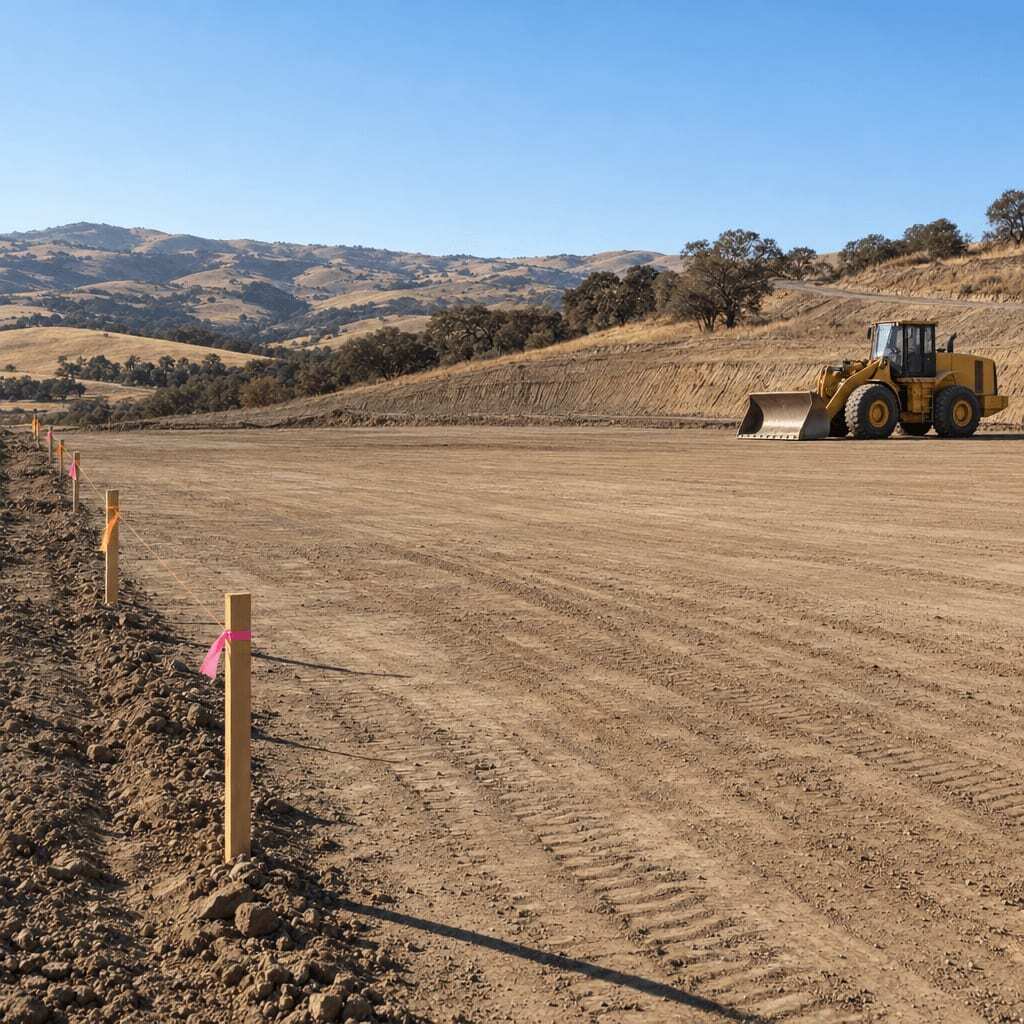
Grading Services
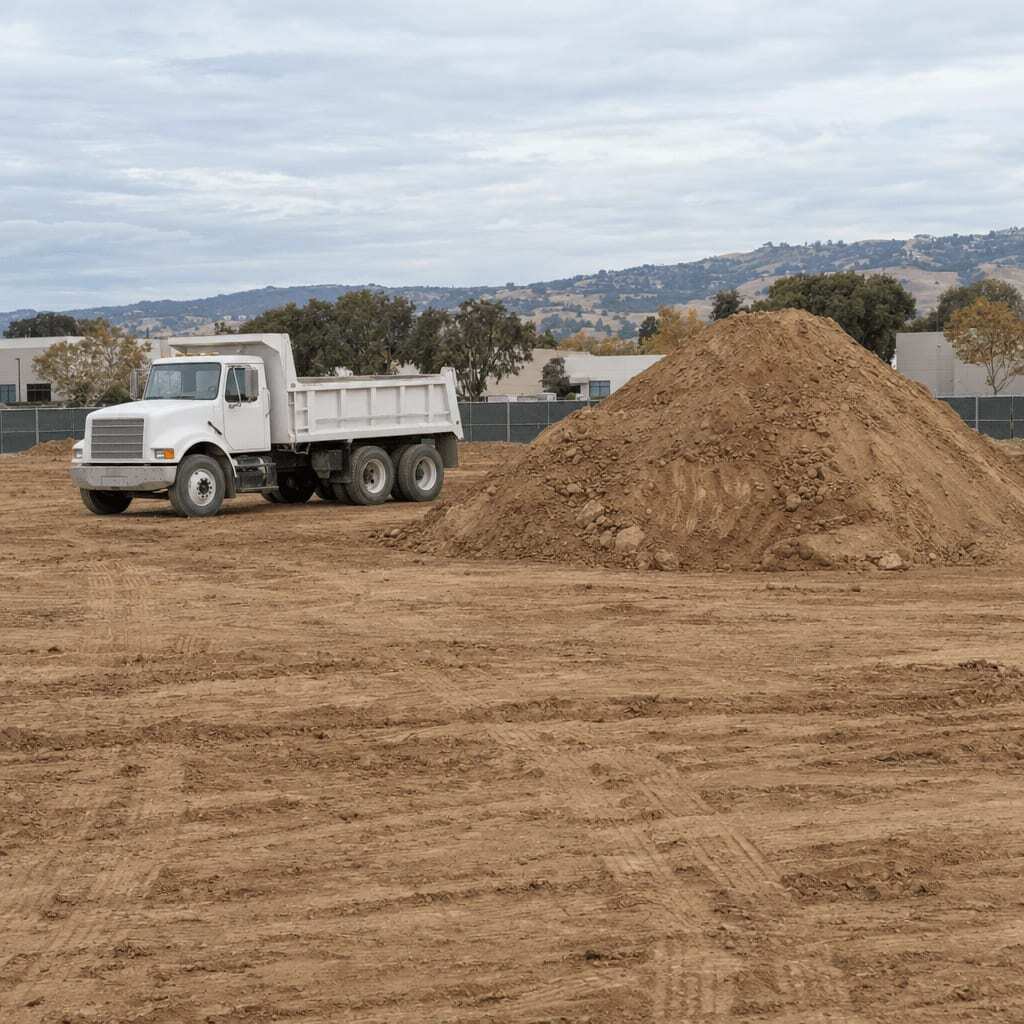

Most bids I see lose money long before the first machine shows up. The number looked fine on paper, but the takeoff missed something: an export the plans never spelled out, a utility trench that runs deeper than anyone measured, a paving section priced as one lift when the detail shows two.
An earthwork takeoff is the count of every quantity in a sitework job: the cut and fill, the dirt that has to be hauled in or out, the trench lengths and depths, the base and paving sections, and the items the plans leave to the bidder. If you want to know how to bid a construction job and keep the money you priced, the takeoff is where it starts, and it has to catch the scope before the price is locked.
Most small contractors do this at night after a full day in the field. That is exactly when things get missed.
A sitework number is only as good as the quantities under it, and these are the five places we check on every bid.
Soil here can change from clay to sand to rock across one site, and that changes the shrink and swell, the compaction effort and whether the native material can be reused at all. Tight urban lots leave no room to stockpile, so dirt that balances on paper may still have to be hauled off and brought back. Each city also has its own grading permit, erosion control and stormwater requirements, and the work they add belongs in the number.
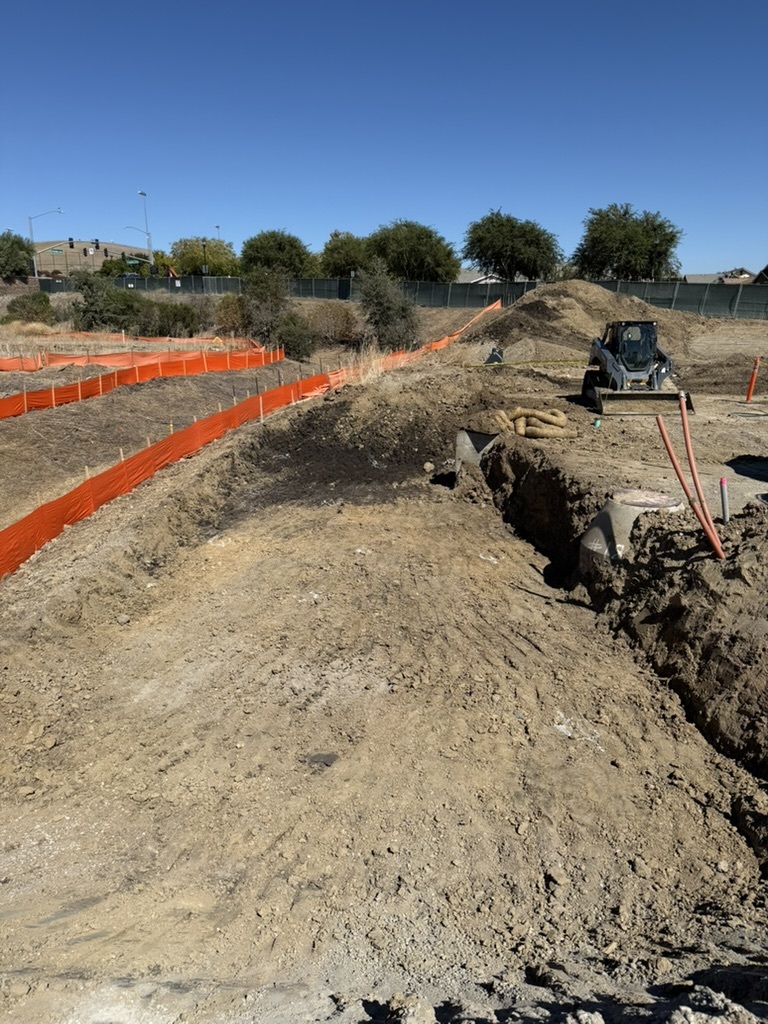
The depth on the profile sheet becomes digging, spoil and backfill in the field, which is why the takeoff has to measure every trench.
Missed scope shows up in one of two ways. Either you win the job and pay for the gap out of your margin, or you pad the number to cover what you are not sure about and lose the bid to someone who counted it. Neither shows up until it is too late to fix. A clear takeoff, with the exclusions spelled out in your proposal, lets you bid tight with confidence and gives the GC a number they can compare fairly.
We do the estimating work, not just the advice. Our estimators pull the plans, run the full quantity takeoff, collect material quotes and gather subcontractor pricing where it is needed, then package everything into an estimate you review and submit to the GC. The same team that bids our own grading, underground and paving work bids for our clients, so we flag scope gaps and risk items before you are locked into a price, and we stay in touch with you through the bid.
Book a discovery call on our Consulting & Estimating page, or read how we help contractors land bigger work.
If you bid sitework without a full-time estimator, book a discovery call, contact us or call (408) 256-1513 and tell us what you are bidding.