Contractor Tips
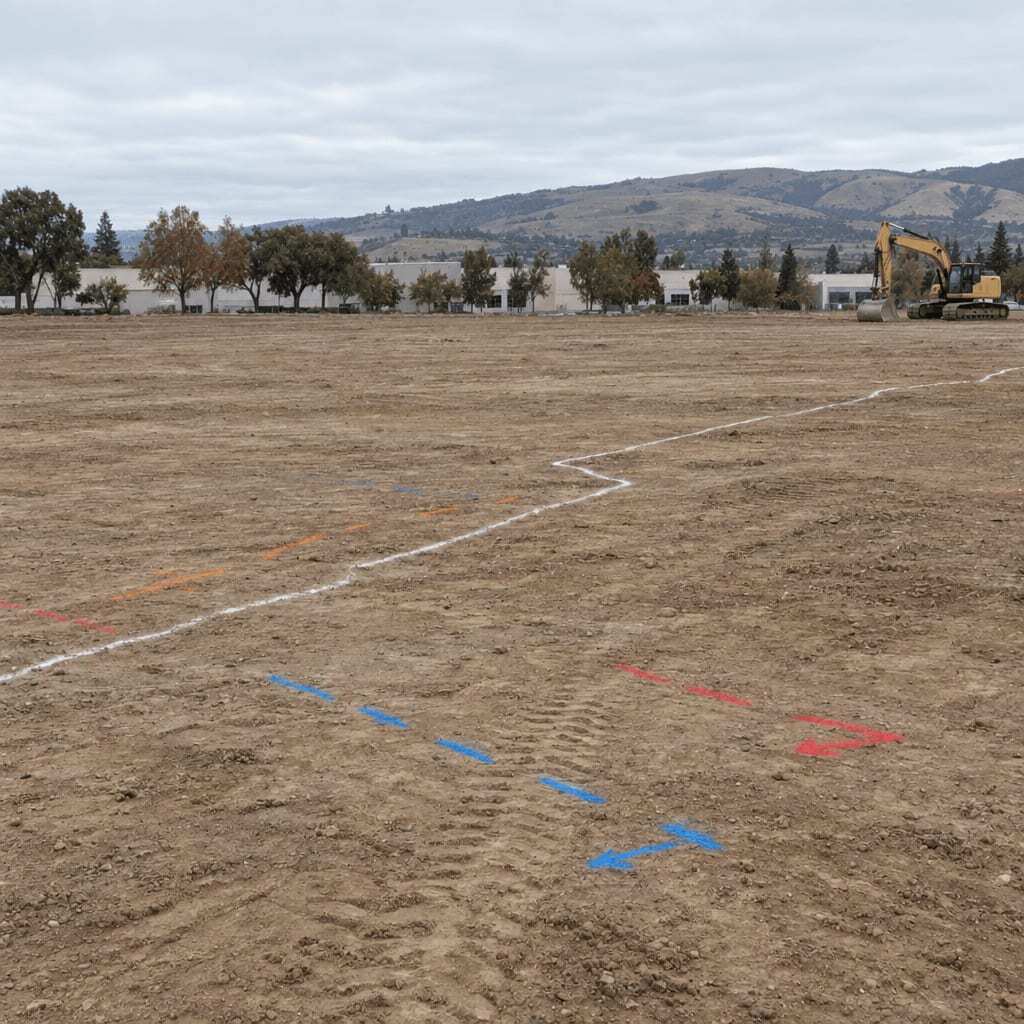

The jobs that go sideways in the dirt rarely go sideways because of the digging. They stop because a line nobody marked gets hit, a hole fills with water in the first storm, or an inspector finds a permit condition nobody planned for. Once that happens, the crew stands around, and every trade behind us on the schedule waits too.
Here is the short answer. Before commercial excavation starts on a Bay Area site, five things should be settled: the 811 ticket and marked utilities, a soils report that tells you what the ground and the groundwater will do, the city's grading and excavation permits with their rain-season conditions, a shoring plan wherever the cut runs close to a property line or a street, and a plan for where the spoils go and how the trucks get in and out.
None of it is complicated. It just has to be done before the machine shows up, not after.
On a commercial site, these are the five items I want settled before we put a bucket in the ground.
Ground here changes fast. A site in Santa Clara can have stiff clay on one end and old fill on the other, and groundwater can sit high on lots near the Bay. Many jobs are tight urban infill with buildings on the property line and no room to stockpile, so every load has to leave as soon as it comes out. And each city writes its own permit conditions, so any excavation contractor in the Bay Area has to read them fresh on every job instead of carrying over what worked in the last town.
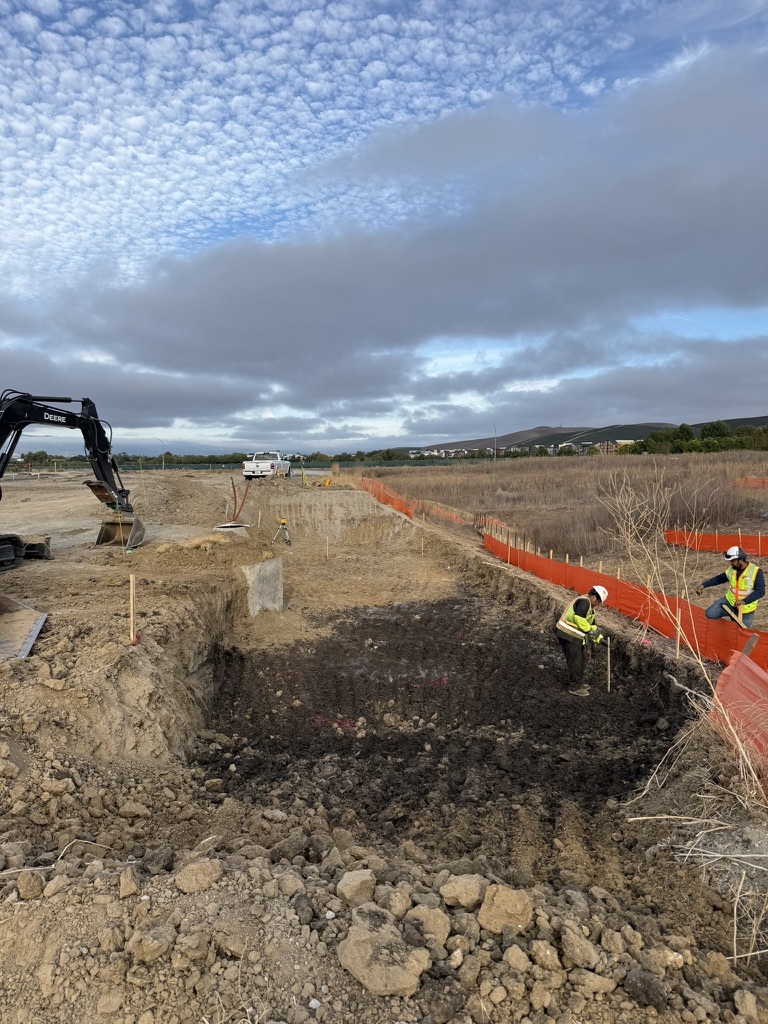
On a commercial excavation, the soils report and the haul plan show up right here, in the cut wall and the pile beside it.
A utility strike stops the job and can put people in danger. A red-tagged permit stops it too, and so does a hole full of rainwater with no plan to pump it or protect it. Each of those costs days, sometimes weeks, and the GC carries the cost of every trade standing by. Planning the dig in plain detail looks slower on paper and runs faster in the field.
We do Class A General Engineering work: grading and excavation alongside underground utilities, paving and asphalt, concrete, landscaping and demolition. Before we dig, we go through the plans and the soils report with the GC's team and talk through access, haul-off and the schedule. Our crew and equipment work from that plan, and we keep you informed as the hole opens so the next trade knows when the ground is ready. For what happens to the ground after the dig, our post on rough vs finish grading walks through both passes.
See the scopes we cover on our Field Services page, or learn more About Us.
If you have a commercial site in the Bay Area coming up for bid, request a bid or call us at (408) 256-1513 and tell us about the project.